
BY DIGMA ZUBAIRU, FEBRUARY 01, 2026 | 04:27 PM
Attention:
Traditional Rulers, Religious Leaders, Community Elders, Women and Youth Leaders, Civil Society Organisations, Opinion Leaders, and Policy Stakeholders
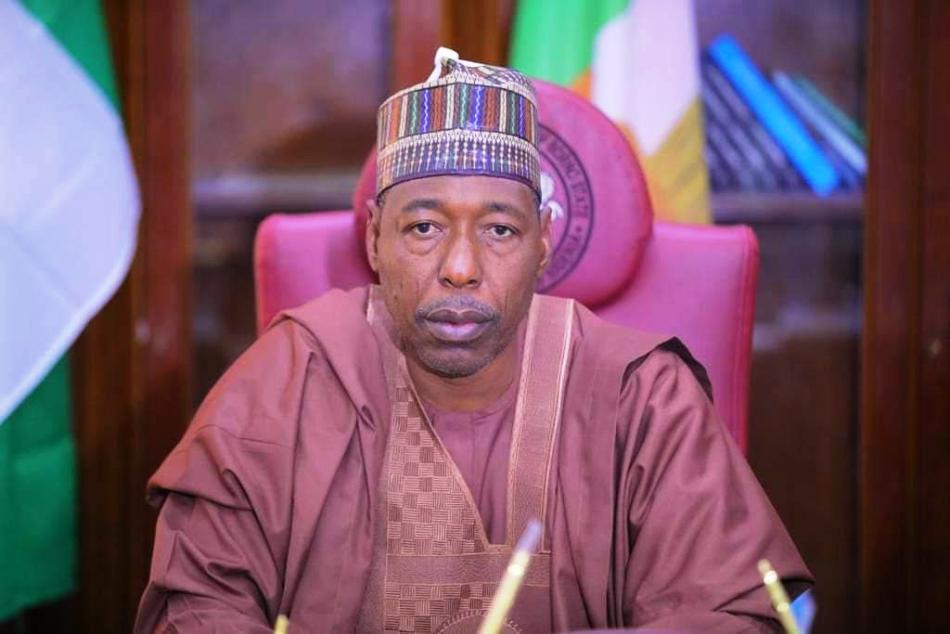
In governance, there are moments in history when conventional politics must give way to practical wisdom. Such moments call for the Doctrine of Necessity—a principle invoked when extraordinary circumstances demand extraordinary continuity of leadership for the greater good of society. Borno State today stands at such a defining crossroads. Having practically witnessed the giant developmental strides recorded in Borno State under the leadership of His Excellency, the Executive Governor, Prof. Babagana Umara Zulum, con, mni, fnse, GCON (Niger), it becomes not only reasonable but imperative to advocate for the doctrine of necessity as a stabilizing and progressive option for the state.
Unprecedented Development Across Critical Sectors
Borno State, once synonymous with conflict, displacement, and infrastructural collapse, is steadily transforming into a model of post-conflict recovery and purposeful governance. This transformation is neither accidental nor cosmetic; it is the direct outcome of Governor Zulum’s vision-driven, people-centered leadership.
In education, the administration has reconstructed, rehabilitated, and equipped hundreds of primary and secondary schools destroyed by insurgency. Teacher recruitment, training, and welfare have been prioritized, while access to education for internally displaced children and vulnerable communities has been expanded. Tertiary institutions have also enjoyed renewed attention through infrastructure upgrades and academic support.
In the health sector, Governor Zulum has overseen the construction and revitalization of hospitals, primary healthcare centers, and specialist facilities across the state. These interventions have significantly improved access to quality healthcare, particularly in rural and conflict-affected communities, reducing maternal and infant mortality while strengthening emergency response capacity.
Security, Stability, and the Return of Hope
Perhaps the most defining achievement of this administration is in the area of security and resettlement. Through strategic collaboration with security agencies, community leaders, and federal authorities, many previously abandoned towns and villages have been resettled. Thousands of displaced persons have returned home with dignity, supported by housing, livelihoods, and social services. Governor Zulum’s courage, including his personal visits to frontline communities, has restored public confidence and sent a powerful message that governance must be visible, responsive, and fearless.
Infrastructure, Housing, and Economic Revival
In terms of infrastructure, Borno State has witnessed an unprecedented expansion of road networks connecting urban centers to rural communities, thereby stimulating trade, agriculture, and social integration. Massive investments in housing—from IDP resettlement estates to civil servants’ accommodation—have addressed decades-long deficits and improved living standards.
These efforts collectively contribute to economic recovery, job creation, and social cohesion, laying a solid foundation for sustainable development.
Restoring Discipline and Social Order Among Youths
One critical area where Governor Babagana Umara Zulum took a bold and decisive step is in restoring discipline and social order among youths across Borno State.
Before the current administration, the state was faced with the challenge of errand youths and informal youth groups who constituted serious nuisance in society. These groups were involved in intimidation, street violence, drug abuse, harassment of citizens, and other hardened criminal activities that threatened peace and public safety. Among such groups were the so-called “Ecomog” movements, whose activities created fear and lawlessness in many communities.
Immediately after assuming office, Governor Zulum demonstrated strong political will by ordering the total scrapping of all forms of unregulated youth movements in the state, with particular emphasis on dismantling the Ecomog groups. This decision was firm, clear, and uncompromising, sending a strong message that criminality and disorder would no longer be tolerated under any guise.
Beyond dismantling these groups, the Governor went further to constitute a task force charged with addressing youth restiveness, social vices, and criminal behavior across the state. This task force works to curb:
i. Drug abuse and street violence ii. Gang activities and intimidation iii. Thuggery and other anti-social behaviors
This intervention has significantly reduced street-level crime, restored calm in urban and semi-urban areas, and improved public confidence, especially among traders, parents, commuters, and community leaders.
At the community level, residents now testify that:
a. Streets are safer than before b. Youths are less openly violent and disorderly c. Law and order have improved d. Respect for authority and communal norms is gradually returning Importantly, this policy was not just punitive; it was preventive and corrective, aimed at protecting the future of young people while safeguarding society. By drawing a clear line between lawful youth engagement and criminal behavior, the administration reaffirmed that discipline is a foundation for development.
Why the Doctrine of Necessity Applies
The Doctrine of Necessity is not about personal ambition; it is about protecting progress. Borno State remains a post-conflict society where institutional stability, continuity of policy, and trusted leadership are critical. Abrupt disruption of a reform-oriented administration at this sensitive stage could reverse hard-earned gains.
Governor Zulum possesses a rare combination of technocratic competence, moral authority, grassroots connection, and crisis-management experience. His leadership has become a unifying force across political, ethnic, and social divides. In such circumstances, the doctrine of necessity becomes a moral and pragmatic argument—anchored in the collective interest of the people.
Conclusion
History will remember leaders not by the length of their tenure, but by the depth of their impact. Prof. Babagana Umara Zulum has redefined leadership in Borno State through action, sacrifice, and measurable results. Advocating the Doctrine of Necessity in this context is, therefore, an advocacy for stability, continuity, and the consolidation of peace and development.
For Borno State, this is not just a political argument—it is a developmental necessity.
Digma Zubairu is a Concerned Citizen and Development Stakeholder in Borno State.

Conflict Reporting is dangerous and risky. Our reporters constantly face life-threatening challenges, sometimes surviving ambushes, kidnap attempts and attacks by the whiskers as they travel and go into communities to get authentic and firsthand information. But we dare it every day, nonetheless, in order to keep you informed of the true situation of the victims, the trends in the conflicts and ultimately help in peace building processes. But these come at huge cost to us. We are therefore appealing to you to help our cause by donating to us through any of the following means. You can also donate working tools, which are even more primary to our work. We thank you sincerely as you help our cause.
Alternatively, you can also email us on
info@yen.ng or message us
via +234 803 931 7767