
BY DIGMA ZUBAIRU, FEBRUARY 14, 2026 | 11:15 PM
A fresh debate has emerged in Saudi Arabia, drawing the attention of Muslims around the world. The issue, which many describe as surprising and significant, centers on the method of determining the sighting of the crescent moon—an event that marks the beginning of important Islamic months, including Ramadan.
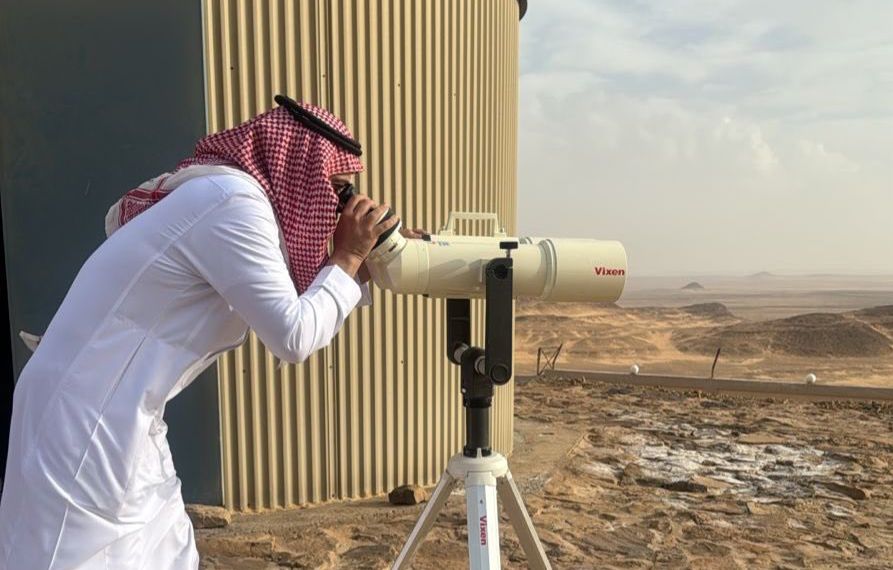
For years, moon sighting in Saudi Arabia has involved not only traditional naked-eye observation but also the use of modern technology. Advanced computer calculations and powerful telescopic devices have been employed to enhance accuracy. Astronomers have clarified that this approach is not unique to Saudi Arabia; many other Muslim countries also rely on similar scientific tools to determine the visibility of the crescent.
However, the current controversy arose following announcements regarding February 17. Authorities indicated that the moon would not be visible on that date due to a lunar eclipse, explaining that the moon would appear very low on the horizon and its visibility would be significantly affected. According to astronomical projections, even if sighted, the crescent could be faint or unclear.
Experts suggested that the moon would be more reliably visible on February 18.
This development has reignited a longstanding question within the Muslim world: Should astronomical calculations be used in determining the beginning of Islamic months, or should reliance remain solely on physical sighting through optical instruments and the naked eye?
Supporters of astronomical methods argue that modern science provides precise and reliable data about the moon’s position, age, and visibility. They contend that if calculations show the moon cannot possibly be seen, claims of sighting should be reconsidered. On the other hand, proponents of traditional sighting emphasize adherence to prophetic guidance, which instructs Muslims to begin and end fasting based on actual sighting of the moon.
The discussion reflects a broader intersection between faith and science—how religious tradition interacts with technological advancement. As the debate continues, one thing remains clear: the determination of the crescent moon is not merely a scientific issue but a deeply spiritual matter that affects millions of Muslims worldwide.
In the end, whether through astronomical calculations, optical instruments, or naked-eye observation, the ultimate goal remains unity, certainty, and faithfulness in fulfilling religious obligations.

Conflict Reporting is dangerous and risky. Our reporters constantly face life-threatening challenges, sometimes surviving ambushes, kidnap attempts and attacks by the whiskers as they travel and go into communities to get authentic and firsthand information. But we dare it every day, nonetheless, in order to keep you informed of the true situation of the victims, the trends in the conflicts and ultimately help in peace building processes. But these come at huge cost to us. We are therefore appealing to you to help our cause by donating to us through any of the following means. You can also donate working tools, which are even more primary to our work. We thank you sincerely as you help our cause.
Alternatively, you can also email us on
info@yen.ng or message us
via +234 803 931 7767
